UK Cyber Security Statistics For Small Businesses 2026
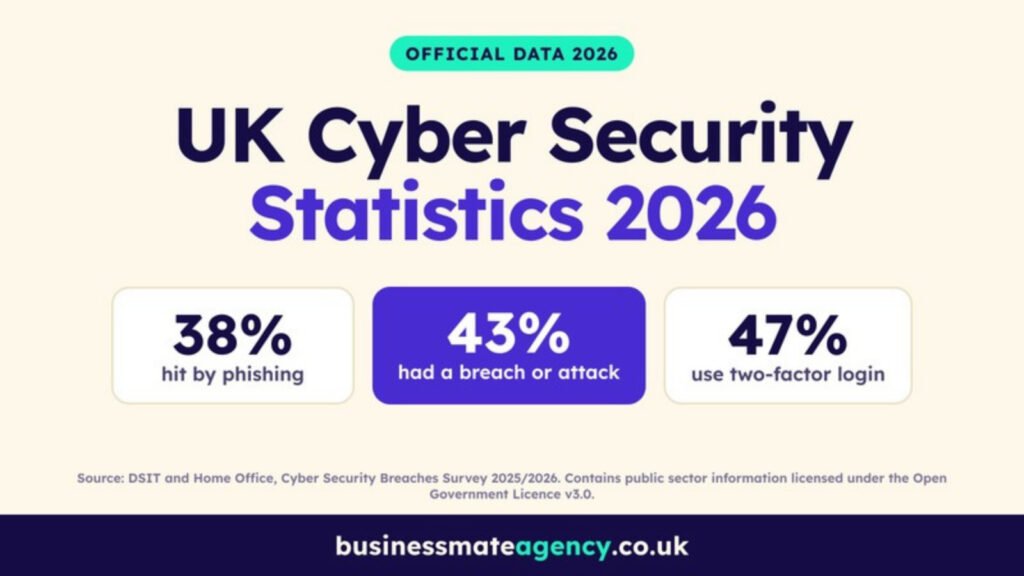
Key findings: 43% of UK businesses identified a cyber security breach or attack in the last 12 months, around 612,000 businesses. Phishing was by far the most common type, affecting 38% of businesses. Most businesses have basic controls in place, such as up-to-date malware protection (81%), but fewer use two-factor authentication (47%). 19% of businesses were victims of cyber crime, around 267,000 businesses.
Source: Department for Science, Innovation and Technology (DSIT) and Home Office, Cyber Security Breaches Survey 2025/2026, published 30 April 2026. Survey carried out between August and December 2025. Covers UK businesses and charities. Figures only include breaches that organisations identified and were willing to report. Contains public sector information licensed under the Open Government Licence v3.0. Summary by Business Mate.
How Many UK Businesses Have A Cyber Attack?
| Business size | Identified a breach or attack in the last 12 months |
|---|---|
| Micro (1 to 9 employees) | 42% |
| Small (10 to 49 employees) | 46% |
| Medium (50 to 249 employees) | 65% |
| Large (250 or more employees) | 69% |
| All businesses | 43% |
The overall figure was in line with the previous year, after a fall from 50% in 2023/2024.
What Kind Of Attacks Do Businesses Face?
- Phishing: 38% of businesses. Among businesses that had a breach, 51% experienced phishing only.
- Ransomware: 1% of businesses, down from 3% in each of the previous 2 years.
- Most disruptive: 69% of businesses and charities that had a breach said phishing was the most disruptive type.
Which Security Basics Do Businesses Have?
| Control | Share of UK businesses |
|---|---|
| Up-to-date malware protection | 81% |
| Secure cloud backups | 74% |
| Password policies | 74% |
| Network firewalls | 74% |
| Restricted admin rights | 73% |
| Two-factor authentication | 47% |
| VPN for remote staff | 36% |
| Staff training or awareness activities | 19% |
Among micro businesses, use of two-factor authentication rose from 35% to 43% in a year. 5% of businesses held the government-backed Cyber Essentials certification, up from 3%.
How Much Do Cyber Attacks Cost?
For most businesses, the survey found the perceived cost of their most disruptive breach was low: the median was £0, and most fell between £0 and £200. In the top 5% of cases, the cost was £4,000 or more for micro and small businesses and £10,000 or more for medium and large businesses.
What The Figures Show For Marketing
Phishing often works by pretending to be a trusted brand or person. The survey also found more businesses reporting reputational damage after a breach (3%, up from 1%). For businesses, a clear and consistent online presence makes it easier for customers to recognise genuine messages.
We are a marketing agency, not a cyber security provider. For official guidance, visit the National Cyber Security Centre (NCSC) website. This is a research summary of official statistics. It is not business, financial or legal advice.
Use These Statistics
You are welcome to quote this summary with credit to DSIT and the Home Office and a link to this page. Suggested citation: Business Mate (2026), UK Cyber Security Statistics For Small Businesses 2026, summarising the Cyber Security Breaches Survey 2025/2026. See also our UK Small Business Marketing Index 2026.
Want Your Marketing Built On Real Data?
Book a free call or message us and we will take a look at your website and marketing.
FAQs
How many UK businesses had a cyber attack in 2026?
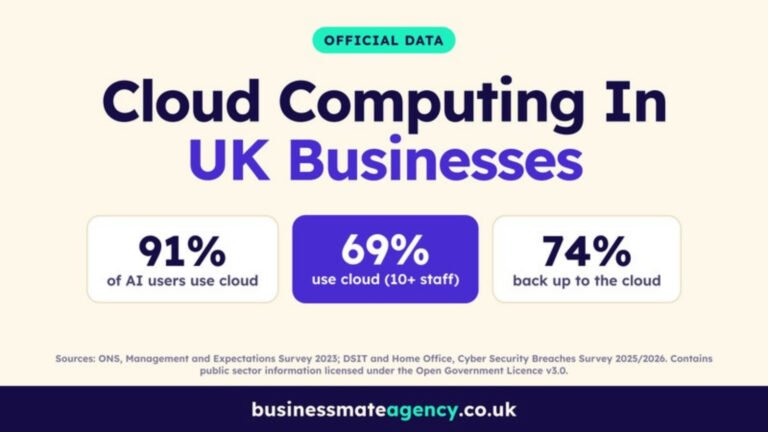
43% of UK businesses identified a cyber security breach or attack in the last 12 months, around 612,000 businesses, according to the government’s Cyber Security Breaches Survey 2025/2026.
What is the most common cyber attack on UK businesses?
Phishing. 38% of UK businesses experienced phishing attacks, according to the Cyber Security Breaches Survey 2025/2026.
Do small businesses get cyber attacks?
Yes. 42% of micro businesses and 46% of small businesses identified a breach or attack in the last 12 months, according to the Cyber Security Breaches Survey 2025/2026.